Thursday, December 8, 2011
3 types of cells (Blog 5)
Red Blood Cells:
Similarities:
Most numerous cells along with muscle cells
and white blood cells
Differences:
Do not contain a nuclei and most organelles,
yet contain alot of hemoglobin
White Blood Cells:
Similarities:
Produced, like red blood cells and muscle cells,
in the bone marrow from stem cells
Differences:
Most last for a very short time, only 18-36 hours.
Muscle Cells:
Similiarities:
Contains a larger amount of mitochondria, along
with certain blood cells, compared to other cells,
such as nerve cells
Differences:
Some types of muscle cells, such as the eye,
are one the few that can be consciously and
finely tuned
REFERENCES:
Google.com
Cell.com
Funsci.com
HELP FROM:
Steven Tan
The Light Microscope V.S. The Electron Microscope (Blog 4)
Scanning Electron Microscope:
This type of microscope, unlike the compound light microscope, scans the specimen by using a beam of electrons. They produce extremely high resolution pictures and can possibly create 3-D images with depth perception.
The microscope also has many cons. The majority of which come from the fact it cannot observe living things, or specimens with water in it. The microscope itself is also very costly to buy and maintain, along with its large size.
Light Microscope:
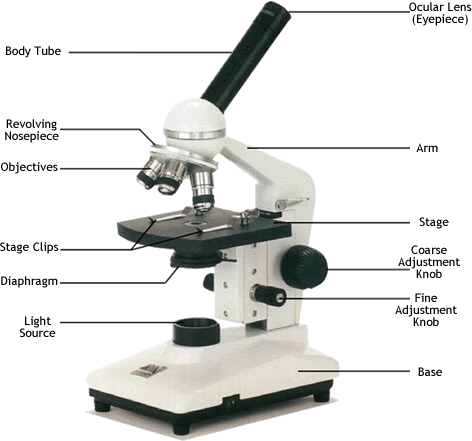
The big advantage light microscopes have over the electron microscope is the fact that it can observe living things, such as cells. They can also observe stained specimens unlike the electron microscope which cannot due to the need for the specimen to be completely dehydrated. The low cost and small size is another plus, especially for high schools and colleges.
The main disadvantage of the light microscope compared to the electron is sheer power. The light microscope cannot observe specimens that are extremely small unlike the electron microscope. This has caused it to fall out of favor for major
The 5 Nutrients For Your Body (Blog 3)
Proteins:
Proteins are used for a variety of functions. They are essential for creating hormones or enzymes and help build and repair body tissues.
Carbohydrates:
The main source of energy, carbohydrates are used not because they are efficient in harnessing all potential energy, but because they provide quick, immediate energy.
Lipids (Fats):
Lipids are mainly used to store energy. They may also carry fat-soluble vitamins, such as vitamin A and D.
Vitamins:
Vitamins, due to the many kinds, have a variety of functions ranging from bodily growth to metabolic regulation.
Minerals:
Like vitamins, minerals have a variety of uses due to the different kinds. Minerals such as potassium, shown above, help regulate body functions, while iron, another mineral, helps form hemoglobin which is used by red blood cells to carry oxygen.
Subscribe to:
Posts (Atom)