Thursday, April 12, 2012

Carbon and Nitrogen Cycles


The Carbon and Nitrogen cycles are two of the biogeochemical cycles that we is used in everyday life. Elements are "bio" in organisms when they are used in daily bodily functions. The elements are then "geo" in the ground when they are converted into different forms of their elements by the bacteria that exists. 


They will exist in the air or water as chemicals when the bacterias have finished the conversion of the elements and are released into nature. We rely on these cycles because they carry the functions that almost every living organism on Earth needs to survive.


Thursday, March 29, 2012

The types of symbiosis


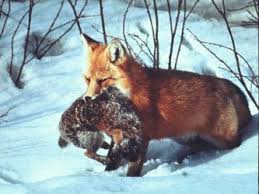
Predator: an organism that eats another organism. 
Prey: an organism that the predator eats.


Parasitism:
a type of non mutual relationship between organisms of different species where one organism, the parasite, benefits at the expense of the other, the host.


Mutualism: 
The way two organisms of different species biologically interact in a relationship in which each individual derives a fitness benefit.


Commensalism: 
A class of relationship between two organisms where one organism benefits but the other is neutral (there is no harm or benefit). There are two other types of association: mutualism (where both organisms benefit) and parasitism (one organism benefits and the other one is harmed).

Thursday, March 22, 2012

Geographic distribution can support The Theory Of Evolution (Blog 18)


Geographic Distribution shows how species adapt and evolve to fit their environment. Depending on where the species' habitat is, they have evolved to suit that area. One might expect that the fossils of ancestral species to a current species would be found geographically near where the current species lives. It only makes sense right? Well this has been found to be true over and over again.

Thursday, February 23, 2012

Questions Of The Week (Blog 17)


       What is Natural Selection?

        Natural selection is a normal process resulting in the evolution of organisms best adapted to the environment. The relation between Natural Selection and Mutations are very simple. Let's say a Giraffe has a small neck and his food is on a tree. It will cause him to keep reaching as far as he can, if the giraffe and its future generations continue to do this process, their necks will start to extend due to evolution which can affect the phenotypes of the Giraffes which will change the genotypes of the future generations so they will be able to have long necks.


What is Exapatation?

 The shift in a function of a trait during evolution. Like, a trait can evolve because of one function, but subsequently it may come to serve another.


Link:
Quizlet.com
Wikipedia.com


Thursday, February 16, 2012

Question Of The Week (Extra Credit) (Blog 16)

* What are some of the social challenges a cloned child might face?

       A cloned child will have to face many challenges during the course of his/her life. Such as media attention, self-consciousness, and the fact that he or she's cloned! If a child was cloned, he/she would not know that he/she is not normal because he/she is cloned. Kids will be avoiding the child because they're different from the rest of society. Even if it is a Scientific milestone for a human to be cloned, the kid will not have a good life.

Question Of The Week (Blog 15)

* Who has the right to have children, no matter how they are created? Who doesn't? Why?

      I believe that every single human being has the right to have children but when it comes to cloning, it is no longer human nature. We do not have the right to be God or act as God. Therefore, we should not try to create life by the use of genetic engineering because we are toying with God. We do not know the long-term effects of cloning. So why are we even trying to figure out? It is okay to have children, but it is only right if it is the offspring from two parents.

Tuesday, February 7, 2012

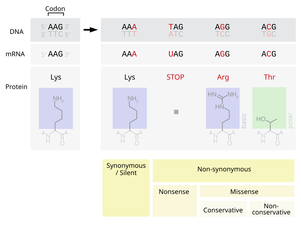
Different Types Of Mutations (Blog 14)


Sense Mutation:
A mutation that changes a termination (stop) codon into one that codes for an amino acid. Such a mutation results in an elongated protein.


Non-Sense Mutation:
a non-sense mutation is a point mutation in a sequence of DNA that results in a premature stop codon


Deletion Mutation:A mutation where a part of a chromosome or a sequence of DNA is missing


Insertion:
A type of mutation where there is an addition of one or more nucleotide base pairs into a DNA sequence.


Frameshift:
A genetic mutation caused by insertions of a number of nucleotides that is not evenly divisible by three from a DNA sequence


Point:
a type of mutation that causes the replacement of a single base nucleotide with another nucleotide of the genetic material, DNA Or RNA.


Translocation:
When a gene breaks off from it's sequence and goes to another one or "relocates"


SOURCES:
http://ghr.nlm.nih.gov/

Thursday, February 2, 2012

Feedback on 1st semester (Extra Credit) (Blog 13)

              In the first semester of this school year, nothing has really confused me. I understand that Biology is a subject that is really easy as long as you maintain a good work ethic. Also, if you just pay attention, you will have the ingredients to a successful semester. I feel very clear on the subject of Genomes, Meiosis, and Mitosis. It was easy because it was just a matter of remembering the steps in Mitosis.  My favorite lab was when we brought chips because we got to eat them. haha. lol. My least favorite was the Kimchi lab. Not because it wasn't good but because the room had a bad odor for a whole week. haha. lol. The type of homework that Ms. Malonek gives us is not too difficult and it is easy. The only thing that I would like to change is the amount of points that we have to go by. The reason why is because 2347832856347856378 points is a lot of points to live up to. lulz.

Name That Gene! (Blog 12)

Gene 1: Huntingtin

Huntingtin is a disease gene linked to Huntington's disease, a neurodegenerative disorder characterized by loss of striatal neurons. This is thought to be caused by an expanded, unstable trinucleotide repeat in the huntingtin gene, which translates as a polyglutamine repeat in the protein product. A fairly broad range in the number of trinucleotide repeats has been identified in normal controls, and repeat numbers in excess of 40 have been described as pathological. The huntingtin locus is large, spanning 180 kb and consisting of 67 exons. The huntingtin gene is widely expressed and is required for normal development. It is expressed as 2 alternatively polyadenylated forms displaying different relative abundance in various fetal and adult tissues. The larger transcript is approximately 13.7 kb and is expressed predominantly in adult and fetal brain whereas the smaller transcript of approximately 10.3 kb is more widely expressed. The genetic defect leading to Huntington's disease may not necessarily eliminate transcription, but may confer a new property on the mRNA or alter the function of the protein. One candidate is the huntingtin-associated protein-1, highly expressed in brain, which has increased affinity for huntingtin protein with expanded polyglutamine repeats. This gene contains an upstream open reading frame in the 5' UTR that inhibits expression of the huntingtin gene product through translational repression. [provided by RefSeq, Jul 2008]

Gene 2: elastin
This gene encodes a protein that is one of the two components of elastic fibers. The encoded protein is rich in hydrophobic amino acids such as glycine and proline, which form mobile hydrophobic regions bounded by crosslinks between lysine residues. Deletions and mutations in this gene are associated with supravalvular aortic stenosis (SVAS) and autosomal dominant cutis laxa. Multiple transcript variants encoding different isoforms have been found for this gene. [provided by RefSeq, Jul 2008]

Gene 3: presenilin 2 (Alzheimer disease 4)
Alzheimer's disease (AD) patients with an inherited form of the disease carry mutations in the presenilin proteins (PSEN1 or PSEN2) or the amyloid precursor protein (APP). These disease-linked mutations result in increased production of the longer form of amyloid-beta (main component of amyloid deposits found in AD brains). Presenilins are postulated to regulate APP processing through their effects on gamma-secretase, an enzyme that cleaves APP. Also, it is thought that the presenilins are involved in the cleavage of the Notch receptor such that, they either directly regulate gamma-secretase activity, or themselves act are protease enzymes. Two alternatively spliced transcript variants encoding different isoforms of PSEN2 have been identified. [provided by RefSeq, Jul 2008]

Gene 5: fibrillin 1
This gene encodes a member of the fibrillin family. The encoded protein is a large, extracellular matrix glycoprotein that serve as a structural component of 10-12 nm calcium-binding microfibrils. These microfibrils provide force bearing structural support in elastic and nonelastic connective tissue throughout the body. Mutations in this gene are associated with Marfan syndrome, isolated ectopia lentis, autosomal dominant Weill-Marchesani syndrome, MASS syndrome, and Shprintzen-Goldberg craniosynostosis syndrome. [provided by RefSeq, Jul 2008]

Gene 6: retino blastoma
he protein encoded by this gene is a negative regulator of the cell cycle and was the first tumor suppressor gene found. The encoded protein also stabilizes constitutive heterochromatin to maintain the overall chromatin structure. The active, hypophosphorylated form of the protein binds transcription factor E2F1. Defects in this gene are a cause of childhood cancer retinoblastoma (RB), bladder cancer, and osteogenic sarcoma. [provided by RefSeq, Jul 2008]

Gene 8: dystrophin
The dystrophin gene is the largest gene found in nature, measuring 2.4 Mb. The gene was identified through a positional cloning approach, targeted at the isolation of the gene responsible for Duchenne (DMD) and Becker (BMD) Muscular Dystrophies. DMD is a recessive, fatal, X-linked disorder occurring at a frequency of about 1 in 3,500 new-born males. BMD is a milder allelic form. In general, DMD patients carry mutations which cause premature translation termination (nonsense or frame shift mutations), while in BMD patients dystrophin is reduced either in molecular weight (derived from in-frame deletions) or in expression level. The dystrophin gene is highly complex, containing at least eight independent, tissue-specific promoters and two polyA-addition sites. Furthermore, dystrophin RNA is differentially spliced, producing a range of different transcripts, encoding a large set of protein isoforms. Dystrophin (as encoded by the Dp427 transcripts) is a large, rod-like cytoskeletal protein which is found at the inner surface of muscle fibers. Dystrophin is part of the dystrophin-glycoprotein complex (DGC), which bridges the inner cytoskeleton (F-actin) and the extra-cellular matrix. [provided by RefSeq, Jul 2008]

Sunday, December 11, 2011

Osmosis Jones: Similarities and Differences (Blog 11)


Osmosis Jones is an animated movie that depicts the human body and how it fights off viruses. The story takes place in the body of a man named Frank. Our main character, Osmosis Jones, is a white blood cell that teams up with a cold pill named Drix.

Together, they take on a virus named Thrax, who wants to destroy Frank's body in a matter of hours.

Similarities:
-In the movie, Osmosis Jones is a white blood cell that is sent to destroy any dangerous substance
that enter Frank's body. Just like the movie, our immune system sends white blood cells to destroy any signs of harm towards our body.

-In our body, whenever a disease is present, our immune system sends white blood cells to destroy it. In the movie, Osmosis Jones is one of the white blood cells that are sent to terminate the disease.

-In real life and the movie, diseases are meant to harm us.

Differences:

-In the movie, Drix, a cold pill, helps terminate a disease. In reality, cold pills don't go in the body to stop a disease. Their main objective is to temporary relieve the body from the effects of a cold.

-In the movie, the cells and organisms that live in Frank's body have human characteristics.

-In real life, each organism or cell in our body has a certain characteristic and function.

The positive benefits from Fungi (Blog 10)

Fungi has many positive benefits. For example, they are the decomposers in nature. They are also used in food production. Some fungi are edible. A certain type of fungi is yeast. Yeast has been used in beer and bread production. There are about 200 different types of mushrooms that are edible.

The Epidemic Simulation (Blog 9)

Healthy,Carrier,Sick,Dead,Immune
399,1,0,0,0
During this simulation, I have found out that with the population of 399 healthy individuals, for one person that comes in contact with the virus, that person does not immediately get sick.

Healthy,Carrier,Sick,Dead,Immune
395,4,1,0,0

In the second stage, it shows that out of every four persons, that become carriers, one gets sick. In this stage, the virus is starting to spread and build its momentum.

Healthy,Carrier,Sick,Dead,Immune
389,5,5,0,1

In this stage, it shows that the virus is getting stronger and that with a total of 5 virus carriers, the number of the sick people, has increased and only one became immune to the virus.

Healthy,Carrier,Sick,Dead,Immune
379,9,10,0,2
In the 4th stage, the virus is starting to attack in full force, the number of sick people has doubled with only a few carriers being added and with only two being immune.

Healthy,Carrier,Sick,Dead,Immune
366,16,13,3,2
In this stage, I have found out that it only takes 5 stages for a virus to claim lives. Even with less than 20 carriers and sick people, the virus can actually kill 3 people. The ratio between people getting sick and being immune is very low.

The Hot Zone (Blog 8)

The thing that has suprised me most about the book is how easily a virus can manipulate a body. For example, the virus Ebola, can kill a human in the course of 10 days. It shows how our body's immune system is not strong enough against certain diseases.

The Ebola virus is a very strong virus in the sense that if it takes HIV (AIDS) ten years to completely destroy our body, the Ebola virus can do it in 10 days.

How does a vaccination stop a virus? (Blog 7)

Vaccination is the process done by injecting a small dose of weak virus into your body to familiarize the body with the disease. Your immune system will be strong enough to fight off a small dose of this virus so when the actual disease hits, your body is immune to it.

The Movement Of Cells (Blog 6)


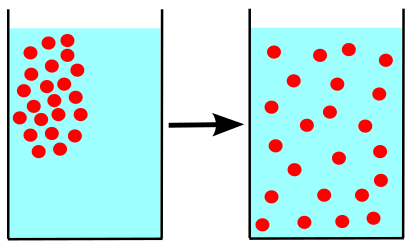
Diffusion:
Gas exchanges in the lungs work using diffusion. The Carbon Dioxide that is produced as a result of the oxygen is removed due to there being a higher concentration of carbon dioxide inside than outside.

Osmosis:
Putting a sponge in water will cause the water to be absorbed since there is a higher concentration of water outside than in.


Facilitated Diffusion:
Glucose can't normally go through the cell membrane due to the lipid bilayer, but due to the protein in the membrane, it can enter.

Active Transport:
Sodium, in the body, requires ion pumps which allow it to go against the concentration.


Endocytosis:
Bacteria being taken by the cell through the cell membrane.


REFERENCES:
http://www.biolsci.org/v03p0303.htm
http://biology.about.com/b/2006/01/12/cell-movement.htm

Thursday, December 8, 2011

3 types of cells (Blog 5)


Red Blood Cells:

Similarities:
Most numerous cells along with muscle cells
and white blood cells

Differences:
Do not contain a nuclei and most organelles,
yet contain alot of hemoglobin


White Blood Cells:

Similarities:
Produced, like red blood cells and muscle cells,
in the bone marrow from stem cells

Differences:
Most last for a very short time, only 18-36 hours.


Muscle Cells:
Similiarities:
Contains a larger amount of mitochondria, along
with certain blood cells, compared to other cells,
such as nerve cells

Differences:
Some types of muscle cells, such as the eye,
are one the few that can be consciously and
finely tuned

REFERENCES:
Google.com
Cell.com
Funsci.com


HELP FROM:

Steven Tan

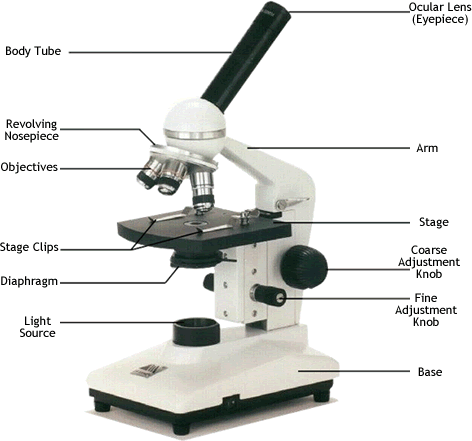
The Light Microscope V.S. The Electron Microscope (Blog 4)

Scanning Electron Microscope:

This type of microscope, unlike the compound light microscope, scans the specimen by using a beam of electrons. They produce extremely high resolution pictures and can possibly create 3-D images with depth perception.

The microscope also has many cons. The majority of which come from the fact it cannot observe living things, or specimens with water in it. The microscope itself is also very costly to buy and maintain, along with its large size.


Light Microscope:


The big advantage light microscopes have over the electron microscope is the fact that it can observe living things, such as cells. They can also observe stained specimens unlike the electron microscope which cannot due to the need for the specimen to be completely dehydrated. The low cost and small size is another plus, especially for high schools and colleges.

The main disadvantage of the light microscope compared to the electron is sheer power. The light microscope cannot observe specimens that are extremely small unlike the electron microscope. This has caused it to fall out of favor for major

The 5 Nutrients For Your Body (Blog 3)

Proteins:
Proteins are used for a variety of functions. They are essential for creating hormones or enzymes and help build and repair body tissues.

Carbohydrates:
The main source of energy, carbohydrates are used not because they are efficient in harnessing all potential energy, but because they provide quick, immediate energy.


Lipids (Fats):
Lipids are mainly used to store energy. They may also carry fat-soluble vitamins, such as vitamin A and D.

Vitamins:
Vitamins, due to the many kinds, have a variety of functions ranging from bodily growth to metabolic regulation.

Minerals:
Like vitamins, minerals have a variety of uses due to the different kinds. Minerals such as potassium, shown above, help regulate body functions, while iron, another mineral, helps form hemoglobin which is used by red blood cells to carry oxygen.

New Wordle (Blog 2)

Wordle: Untitled

Thursday, September 29, 2011